VCAMP Website & Content Platform
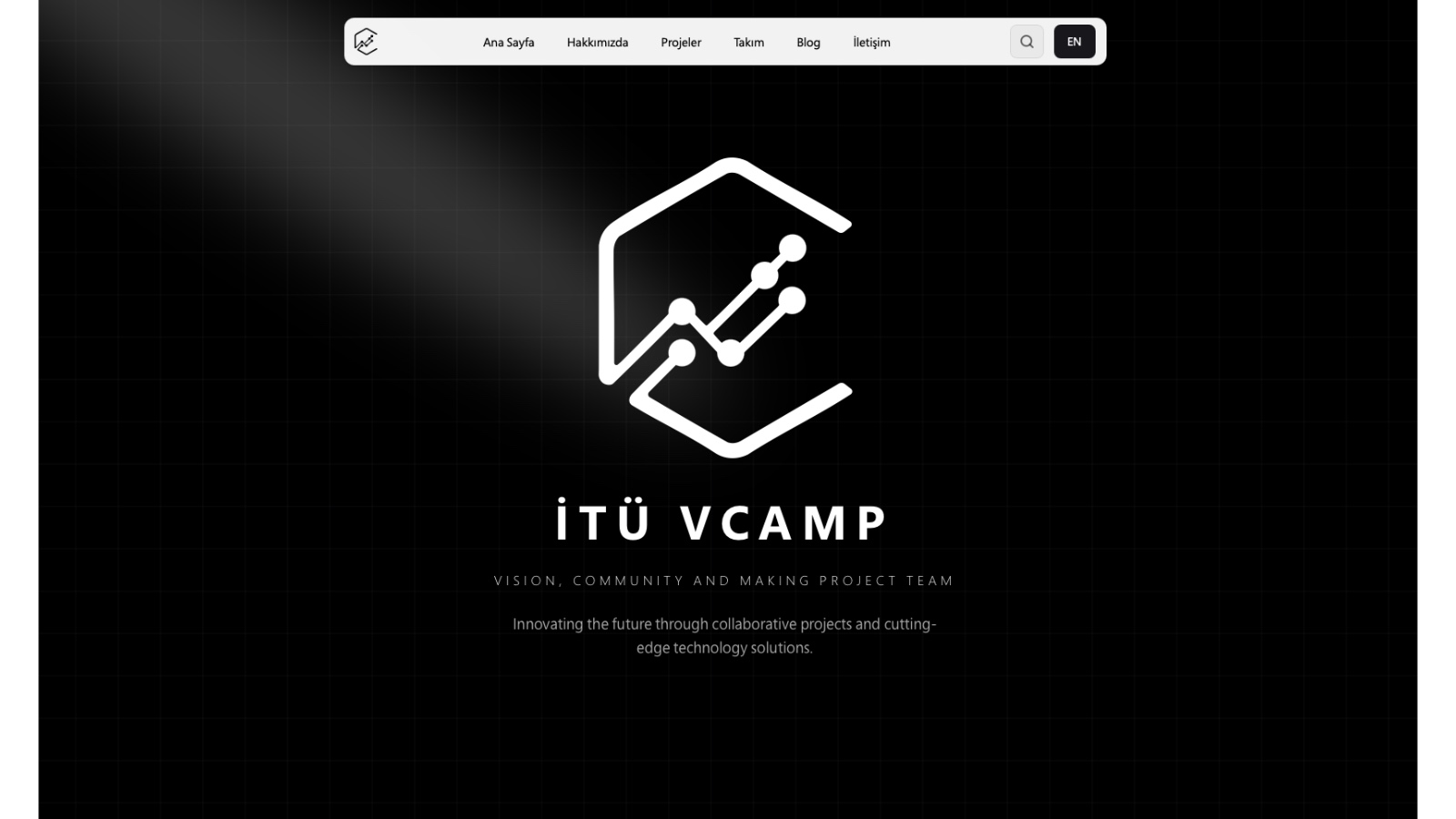
Contributed across frontend and backend development in a 4-5 person team building the VCAMP website and content platform. The system presents team projects, members, sponsors, blog content, organization info, and certificate verification through a React frontend backed by a Django REST API.
Team
0-5
Collaborative development team
Role
Full-stack
Frontend and backend contribution
Modules
0
Projects, team, blog, sponsors, info, courses, certificates, admin
API
REST
Structured content consumed by frontend
Project Gallery
Problem
The team needed a maintainable website where project, team, sponsor, blog, and certificate content could be managed from an admin interface instead of being hard-coded into static pages.
Challenge
The main challenge was connecting a rich public frontend to structured backend content models while supporting project detail pages, media, documents, team relations, blog content, sponsors, and certificate verification in a consistent user experience.
Architecture
How the pieces fit together.
The frontend is a Vite and React single-page application with routed pages for home, projects, team, blog, contact, sponsorship, search, and certificate verification. The backend uses Django, Django REST Framework, relational content models, Django admin, rich-text blog editing, media/document uploads, and read-only public API endpoints consumed by the frontend.
Architecture View
System structure and decision flow
Next.js Frontend
Public portfolio, notes, projects, resume, and localized routes.
Express API
REST endpoints for content, uploads, contact messages, and admin actions.
Admin CMS
Project galleries, note files, image cropping, and dynamic updates.
HTTPS Edge
Public entry point with separated production services.
Dataset / Inputs
- Organization profile content, team members, sponsors, project pages, project media, technical documents, blog posts, courses, and certificate records managed through the website backend.
Technical Decisions
- Use Django admin as the content management surface for non-developer updates.
- Expose read-only REST API endpoints for public website content.
- Model project detail pages as structured related data rather than one large static page.
- Keep certificate verification as a dedicated workflow with code-based lookups and badge-style JSON responses.
Implementation Details
- React and Vite power the routed public frontend for home, projects, team, blog, sponsorship, search, and certificate pages.
- Django REST Framework serializes nested project data including specifications, timeline, media, documents, tests, team, and sponsors.
- The frontend maps raw API payloads into page-specific view models for project summaries, detailed project pages, blog content, and certificate verification.
- The backend includes admin-managed rich text content, media uploads, document attachments, and organization info records.
Metrics / Results
- The platform supports admin-managed content, project detail pages with specifications, timeline, gallery, documents, tests, team and sponsor relations, blog rendering, organization info, and certificate verification with badge-style JSON responses. The project was developed collaboratively by a 4-5 person team with frontend and backend contributions.
Lessons Learned
- Team websites become easier to maintain when project and member data are modeled explicitly.
- Frontend experience depends heavily on shaping backend API responses into stable view models.
- A team project should describe individual contribution clearly without implying solo ownership.
Future Improvements
- Move public configuration and secrets fully into environment-managed settings.
- Add production-oriented security hardening before publishing source code.
- Expand automated tests around API serializers and certificate verification flows.